List of sins for confession: a practical checklist
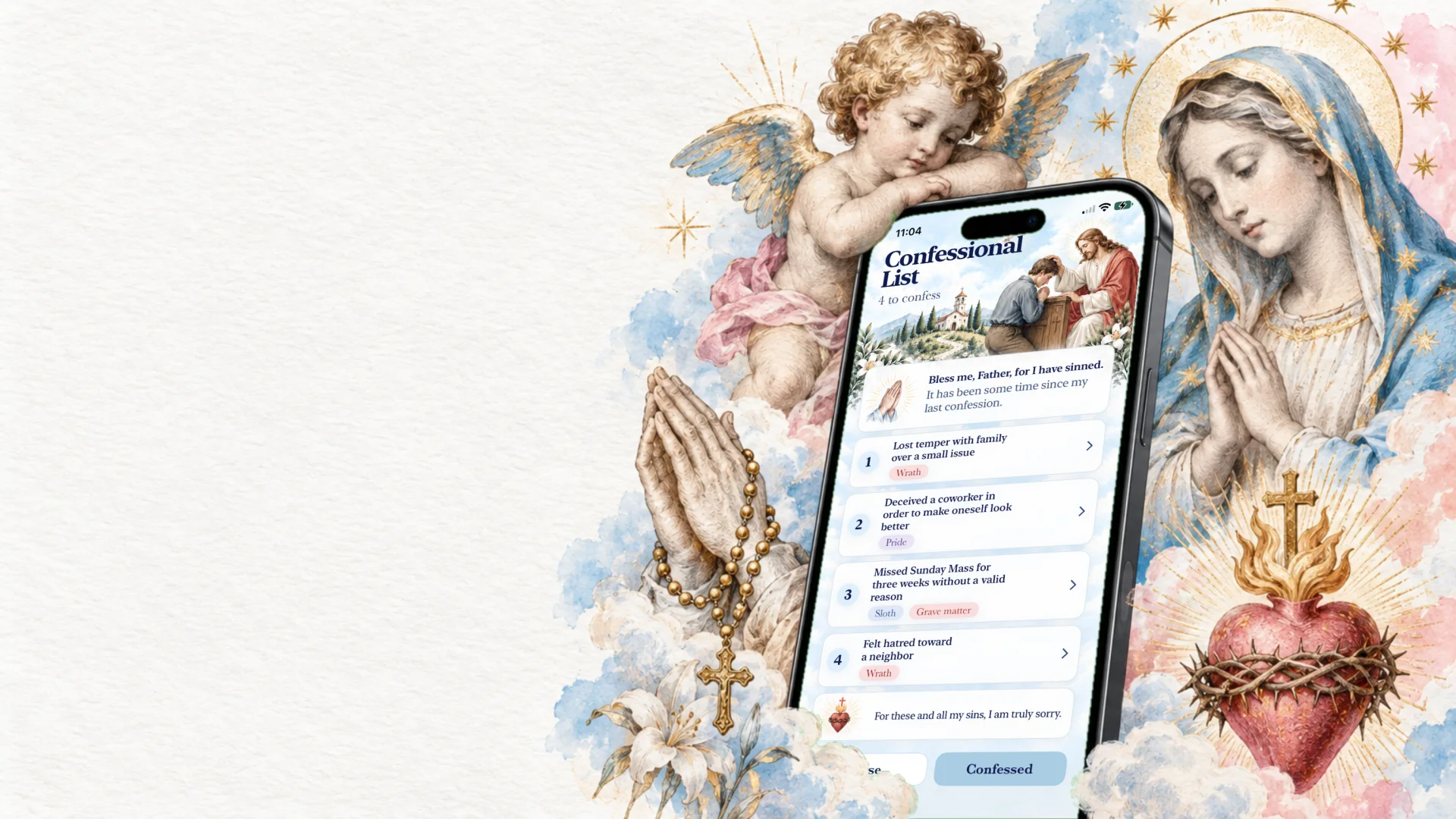
A list of sins for confession is a few plain sentences in your own words: what you did and, for serious sins, roughly how many times. Below is a checklist grouped by area of life, with every line written the way you would actually say it to a priest. Keep the lines that are true for you, change the words to fit, and leave the rest.
What should my list of sins look like?
Shorter than you think. A real list for someone who goes every month or two often looks like this:
- "I missed Mass on Sunday twice, out of laziness."
- "I lied to my boss about why a report was late."
- "I got drunk at a party, once."
- "I've been impatient and harsh with my kids, most days."
- "I gossiped about a coworker a few times."
That's a complete confession. Five lines, two minutes.
The one firm rule is about serious sins. Church law asks you to confess every grave sin you're aware of after an honest examination, "in kind and number" (Code of Canon Law, can. 988). Kind means naming what sort of sin it was: "I stole," not "I did something bad." Number means how many times, or your best honest estimate: "about once a week since the spring." Everyday venial sins don't need a count. Confessing them is not strictly required, though the Church strongly recommends it (CCC 1458).
Not sure whether something is serious? Our list of mortal sins explains what makes a sin grave. When in doubt, put it on the list and let the priest help.
The checklist, by area of life
Scan each group and stop where a line is true. Some of these are serious sins and many are everyday faults. If you'd rather work through questions first, use an examination of conscience, or the longer examination for adults. This page shows what the answers look like once they're written down.
God
- "I missed Mass on Sunday twice, without a good reason."
- "I received Communion when I knew I was in serious sin."
- "I used God's name as a swear word, often."
- "I went weeks without praying at all."
- "I went to a psychic."
- "I hid that I'm Catholic because I was embarrassed."
Family
- "I was disrespectful to my parents, several times."
- "I yelled at my children in anger, most days this month."
- "I've been cold to my husband and shut him out for weeks."
- "I didn't call or visit my mother when she needed me."
- "I haven't taught my children to pray."
Other people
- "I've held a grudge against my brother for months and refused to forgive him."
- "I insulted someone in anger."
- "I wished harm on someone."
- "I drove after drinking, once."
- "I was cruel to someone online."
- "I didn't help a neighbor who needed it, when I easily could have."
Honesty
- "I lied about five times, mostly small lies to get out of things."
- "I told a friend's private business to other people, and it hurt her."
- "I said something false about a coworker to make him look bad."
- "I cheated on an exam."
- "I broke a promise I'd made to a friend."
Purity
- "I looked at pornography, about three times a week."
- "I masturbated, about ten times."
- "I had sex with my girlfriend, several times since my last confession."
- "I entertained impure thoughts on purpose."
- "I told crude jokes."
Name the kind of sin and nothing more. The priest doesn't need a description. If a detail changes what kind of sin it was, say it in a few words, for example that you or the other person is married. If a habit here has a strong hold on you, keep coming back. Habit and anxiety can lessen how responsible you are (CCC 2352), and the priest is there to help, not to scold.
Money and work
- "I took things from work that weren't mine, about $200 worth."
- "I cheated on my taxes."
- "I wasted hours at work that I was being paid for."
- "I haven't paid back money I owe a friend."
- "I gave almost nothing to people in need."
- "I've been envious of my friend's success."
Yourself
- "I got drunk, twice."
- "I used drugs a few times."
- "I was lazy about my responsibilities, most weeks."
- "I spent hours on my phone instead of doing what I should."
- "I've been proud and looked down on people."
Notice how many of these lines are about what you didn't do: the call you didn't make, the help you didn't give, the prayer you skipped. Those belong on the list too. And if a line describes years rather than weeks, say it just as plainly: "I stopped going to Mass for about ten years." Priests hear sentences like that every week, and it is enough.
What shouldn't go on my list?
- Long stories. One sentence per sin. The reasons and the backstory can stay home unless the priest asks, or unless you want his advice about them.
- Other people's sins. "My husband started it" belongs in your husband's confession, not yours. Confess your part, and don't name anyone. "A coworker" is enough.
- Temptations you resisted. Being tempted isn't a sin. A thought you pushed away is a small victory, not something to confess.
- Sins already forgiven. What you confessed and were absolved of is forgiven, and you never need to confess it again. Some people mention an old sin once more out of devotion, which the Church allows, but it isn't required. If worry keeps sending you back to the same old sins, tell the priest that instead. If you forgot a serious sin last time, add it now. Here's what to do if you forgot a sin.
- Vague labels. "I was a bad person" or "I broke the third commandment" doesn't tell the priest much. Name the act: "I skipped Mass twice."
How do I write my list?
- Pray first. Ask the Holy Spirit to show you what you need to see. A sentence in your own words is enough.
- Look back honestly. Go through your days since your last Confession, or use the checklist above as prompts.
- Write one line per sin. Many people put the serious ones first, so the hardest part is said while they still have their nerve.
- Add numbers to serious sins. An honest estimate is fine. "Most weekends" counts.
- Keep it private. Use shorthand only you understand, and throw the paper away after Confession.
When you reach the end of your list in the confessional, you can close with "For these and all my sins, I am sorry." That covers what you couldn't remember.
If you're afraid of missing something
An honest effort is all the Church asks for. Nobody walks in with a perfect list, and the priest isn't checking yours against this one. Sins you sincerely forget are forgiven along with the rest. If making a list leaves you anxious, or you find yourself writing and rewriting it, keep it short and read about scrupulosity. Then go. The priest is there to help you with the list, and you can hand him the parts you're unsure about.

Your next Confession, ready tonight
Holier guides a nightly examination of conscience, helps in moments of temptation, and keeps a clear list ready for your next Confession.
 5.0 on the App Store
Your sin list is encrypted on your iPhone with a key that never leaves it.
Holier helps you prepare for Confession. It is not a priest and does not give absolution. For questions about your own situation, talk to a priest.

